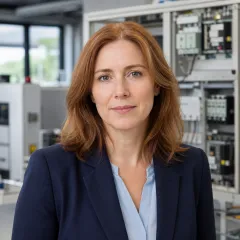
I'm the quality compliance manager at a power control equipment manufacturer. Every panel that ships crosses my desk—roughly 240 units a year. In 2024, I rejected 11.6% of first-article inspections. Most failures weren't mechanical. They were in control logic, component substitutions, and missing documentation. I came up in solar inverter manufacturing, where reliability is the whole game. That background shaped how I look at generator control equipment.
Here's my position: the ATS switch for generators is the last place you should cut costs. It sits between your generator and your critical load. When it fails, you don't lose a part—you lose power. After 12 years in power electronics, I've learned that people treat transfer switches like commodities. They aren't.
What Most Buyers Miss
Most buyers focus on amp rating and price, and completely miss short-circuit withstand, transfer time, and whether the controller can actually work with a genset's governor. The question everyone asks is, what is the continuous rating? The question they should ask is, what happens when I need this switch to close under load?
An ATS with a 400 amp label can have very different short-circuit ratings depending on the manufacturer. One might be tested for 65 kA withstand. Another might only handle 10 kA. In an industrial facility with high available fault current, that difference decides whether the switch holds or arcs. You need to look at the tested short-circuit current rating, not just the continuous amps.
What most people don't realize is that ATS failures are usually control circuit failures, not contactor failures. The main contacts can carry enormous current without complaint. It's the auxiliary contacts, control transformers, and interlocks that wear out or get wired wrong. Those are exactly the components where a manufacturer can save money without changing the spec sheet.
A Parallel Cabinet Is a Sequence Machine
Now go one step up. A synchronized parallel cabinet panel is not just a bigger enclosure with breakers inside. It's a sequence machine. It has to match voltage, frequency, and phase angle before closing the breaker. For no-break or closed-transition transfer, it has to do that quickly enough to avoid a transient that trips the bus.
The brain of that sequence is the synchronized parallel cabinet generator controller. That controller decides when a generator is ready to accept load. It also talks to the engine governor through the engine actuator. If the engine actuator responds slowly or has a lot of deadband, the genset hunts and the synchronization relay refuses to close.
I once tested a setup where the ATS and the controller were fine, but the engine actuator wasn't fast enough for the closed transition. We measured a 400-millisecond frequency overshoot before the controller opened the breaker. No software tuning fixed it. We had to replace the engine actuator.
Engine Generator Parts Are Not Optional Upgrades
That's why I treat engine generator parts accessories as part of the control system, not as optional upgrades. Governors, actuators, voltage regulators, and transducers all have to match the controller's expectations. If the controller sends a step change and the actuator doesn't move within its specified time, the whole synchronizing process becomes unstable.
Also, check the actuator's failure mode. If the actuator goes to full fuel when the control signal is lost, the genset can overspeed. That's not a tuning issue. It's a safety issue. The actuator needs to fail to a safe position, and the controller needs to detect the signal loss. Those details separate a properly designed paralleling system from a parts-bin arrangement.
For a synchronized parallel cabinet industrial installation, the environment makes this worse. A control card that works on a clean test bench can misbehave in a room full of generator vibration, heat, and imperfect power. If you spec a panel without checking the actuator's response time and the controller's isolation rating, you're building a prototype, not a product.
The Real Premium Is Certainty
In March 2024, we needed a paralleling cabinet delivered before a planned substation shutdown. The vendor's standard lead time was eight weeks, but they wouldn't commit to a firm date. We paid a little extra for a confirmed production slot and a factory witness test. That wasn't a rush fee. It was a certainty fee.
The witness test caught a wiring issue in the generator controller that would have taken days to find in the field. The confirmed date meant our client could schedule the shutdown without adding a week of slack. In an emergency power system, the delivery date is part of the specification. A panel that arrives late isn't cheap—it's a schedule wreck.
Looking back, I should have demanded a confirmed delivery date on a previous project. I assumed the quoted six-week lead time was real. It wasn't. The cabinet arrived 11 days late, and the entire installation schedule collapsed. That mistake taught me that uncertain delivery is a hidden risk, not a minor inconvenience.
Most buyers treat expedite fees as a way to buy speed. I see them as a way to buy certainty. Sometimes an expedite fee is just a line item that doesn't change the schedule. What matters is a date-specific commitment. I'd rather pay 5% more to a vendor who signs a delivery date than save 10% with one who says they'll try.
To Be Fair, Price Matters
Granted, budget constraints are real. I'm not saying you should ignore price. I'm saying you should separate purchase price from total cost of failure. A $200 savings on an ATS is meaningless if it loses a $20,000 day of uptime.
And I'm not saying every expensive transfer switch is worth its premium. Some are overbuilt for the application. But you can't tell the difference from a data sheet alone. Ask for proof: a UL 1008 test certificate, an IEC 60947-6-1 compliance statement, and a wiring diagram that explains the control sequence. For emergency power systems, NFPA 110 also sets requirements. If the vendor can't provide those documents, the low price isn't a bargain—it's a gamble.
Bottom Line
An ATS switch for generators is the boundary between your backup power and your business. A synchronized parallel cabinet panel is the orchestration layer. A synchronized parallel cabinet generator controller is the timing brain. The engine actuator is the hand on the throttle. None of them should be chosen by price alone.
Specify for failure mode, require test documentation, and put a confirmed delivery date in the contract. That's what certainty means. And in power equipment, certainty is the only premium that pays for itself.